

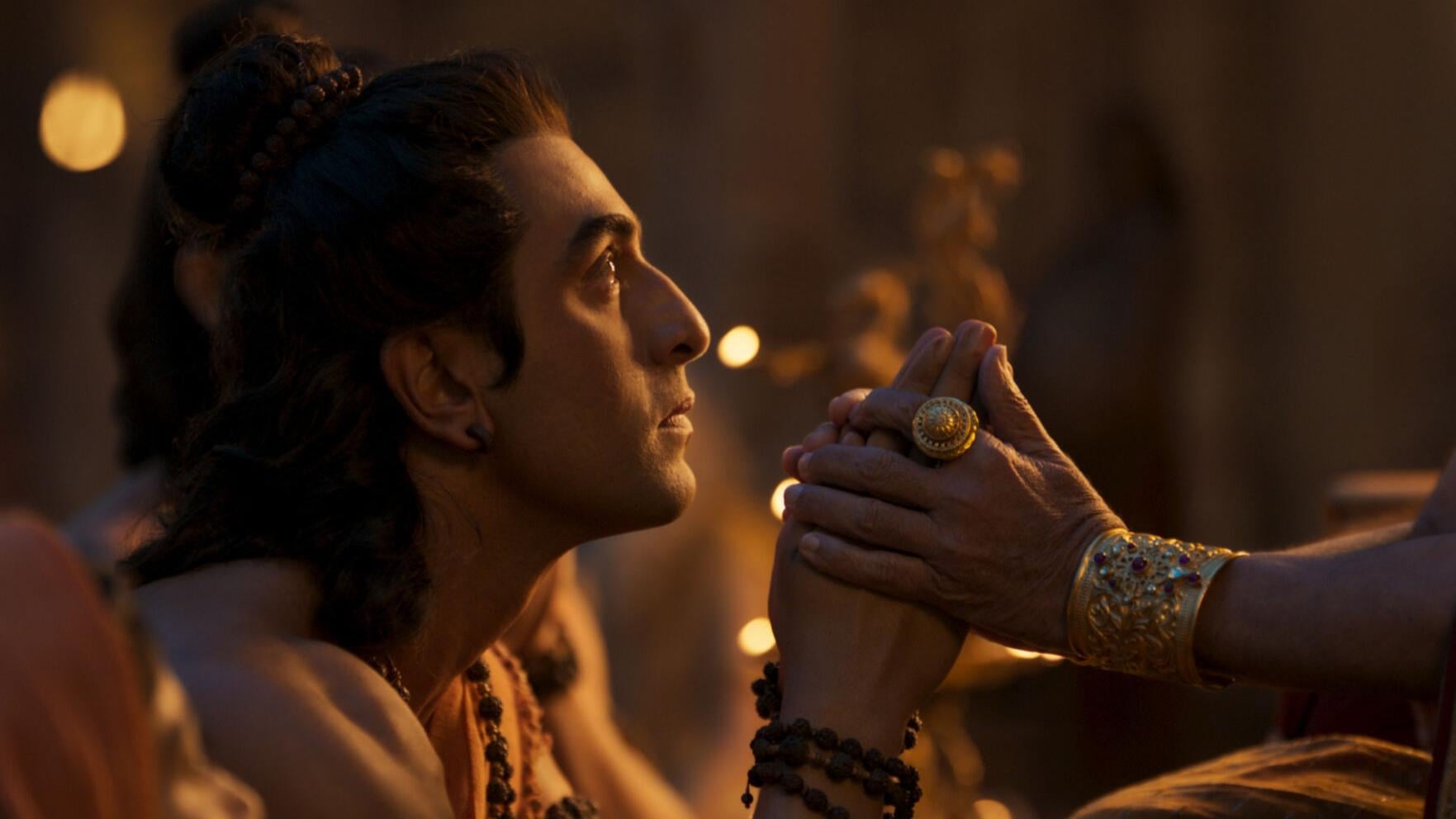
Key facts
- The film synthesizes the star power of Bollywood, two Oscar-winning music composers and Hollywood visual effects.1
- Ashish Agarwal is a 29-year-old IT professional based in New Delhi.1
- A Hindu group has called for the film’s boycott and threatened nationwide protests if similar alleged distortions appeared.1
The Ramayana is one of Hinduism’s foundational texts.1
The Ramayana’s retellings over millennia have transcended genre as well as national, religious, linguistic and cultural boundaries.1
The Ramayana has inspired religious and political movements, including the campaign for a grand temple honoring Rama in Ayodhya.1
The film was directed by Nitesh Tiwari.1
The film is the most expensive Indian film to ever be made.1
It has also inspired religious and political movements — including the campaign for a grand temple honoring the epic’s protagonist, Rama, in Ayodhya, that helped propel Indian Prime Minister Narendra Modi and his Bharatiya Janata Party into power..1
The film’s second part is scheduled to be released next year.1
The film has sparked a global debate about its authenticity and faithfulness to traditional versions of the story.1
The film was originally composed by the poet Valmiki.1
A Debate Over How the Story Should Be Retold
In India, the film has prompted a debate over how one of Hinduism’s most sacred stories, originally composed by the poet Valmiki, should be retold for modern audiences.1
Ashish Agarwal, a New Delhi-based, 29-year-old IT professional, said he watched the film twice and was blown away by the production, especially the world-class visual effects “on par with Marvel movies.”1
But others like Shweta Gehlot, a 46-year-old schoolteacher, found glaring misrepresentations of the scripture with which she had grown up.1
Gehlot said she particularly objected to Ravana being portrayed as a just ruler while traditional versions cast him as an evil, arrogant, lustful demon or “rakshasa” who persecuted sages.1
A Hindu Group Calls for a Boycott
A Hindu group has called for the film’s boycott and threatened nationwide protests if similar alleged distortions appeared in its second installment, which is expected around the same time next year.1
Comparisons With Ramanand Sagar’s Adaptation
The criticism has also revived comparisons with Ramanand Sagar’s celebrated 1980s television adaptation, “Ramayan,” which enthralled millions, turning a weekly Sunday morning broadcast into a collective ritual.1
Box Office Success in the U.S.
In the U.S., by its third weekend, the film has become the highest-grossing Indian production ever at the box office, raking in $28 million.1
Mallika Iyer, 31, an Indian American living in New Hampshire, said she learned much of the Ramayana from Amar Chitra Katha comics, a series founded in the 1960s by Anant Pai that retells Indian mythology, history, folktales and biographies.1
Iyer has watched the film twice, and says it is entertaining, engaging and sometimes “magical.”1
Iyer said she appreciated how Ravana and his sister were portrayed in balanced, nuanced ways instead of “as just plain evil.”1
Iyer said she could see how some might have felt that the computer-generated special effects diluted the sanctity of the Ramayana.1